Solving European Writer’s Block in Jewish Cairo (T-S 20.188) (2023)
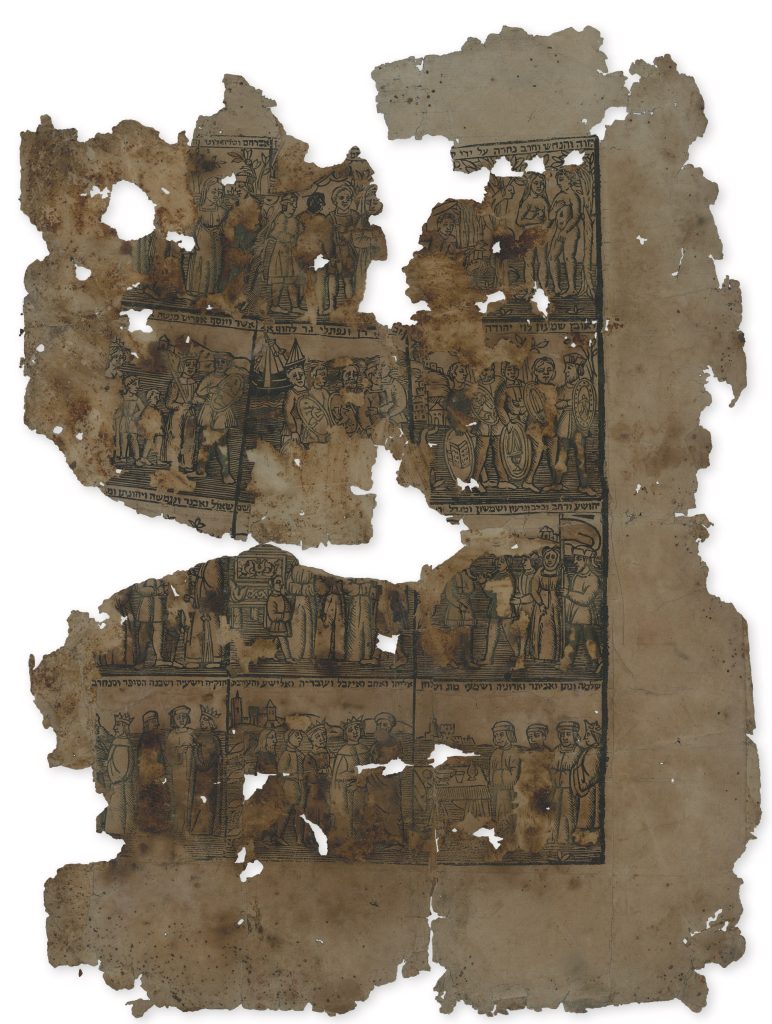
One of the duties of the Cambridge Genizah Research Unit (GRU) is to identify and describe the manuscript fragments in the Taylor-Schechter Collection. That Collection contains almost 200,000 fragments, so this job is taking a while. Luckily, the GRU regularly employs experts in medieval Hebrew, Arabic, and Aramaic to catalogue the contents of medieval texts. This makes sense: those were the main written languages of medieval Cairene Jews. We want to identify the author, date and location of production for every manuscript in the Collection, so it is necessary to consult specialists in historical languages (‘philologists’), handwriting (‘palaeographers’) and manuscript production (‘codicologists’).
It is not, however, common for the GRU to employ experts for niche subsections of the Collection—things that are not handwritten, not Semitic languages or not medieval. For example, the Taylor-Schechter Collection contains thousands of pages from books printed between 1480 and 1897, but these are far less numerous than the earlier manuscripts that attract the philologists and palaeographers. Consequently, there are some items in the Collection that the GRU currently lacks experts to identify. This Fragment of the Month is one of those items.
Cite this work: Posegay, Nick. 2023. “Solving European Writer’s Block in Jewish Cairo (T-S 20.188).” Fragment of the Month (January). Cambridge: University Library Genizah Research Unit.