About This Site

Thank you to me for making this site. Thank you to academia./edu for forcing my hand by making their own site unsuitable for hosting academic materials. Most of all, thank you to you, dear reader, for finding this weird sidebar.

Contact: nposegay@yahoo.com
Bluesky: @NPosegay

Privacy Policy

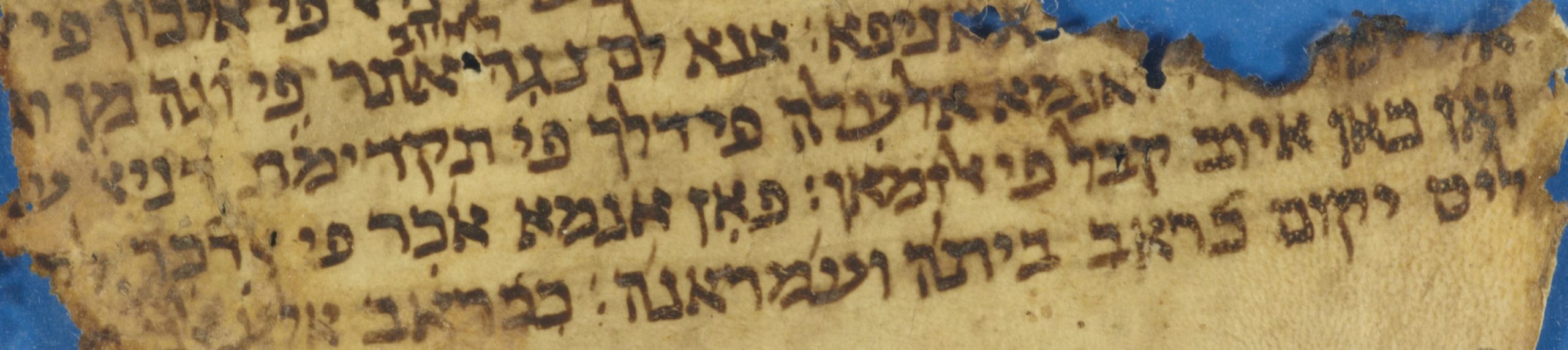
The Arabo-Tiberian Vocalisation System: An Undocumented Set of Medieval Vowel Signs for the Hebrew Script (2025)

The three main Hebrew vocalisation systems—Tiberian, Palestinian, and Babylonian—are well-known in the history of Semitic languages. This article describes another previously undocumented Hebrew vocalisation system, the ‘Arabo-Tiberian system’, a sub-variant of the Tiberian system that appears only in Judaeo-Arabic manuscripts around the tenth and eleventh centuries. In addition to the typical Tiberian vowel marks, the
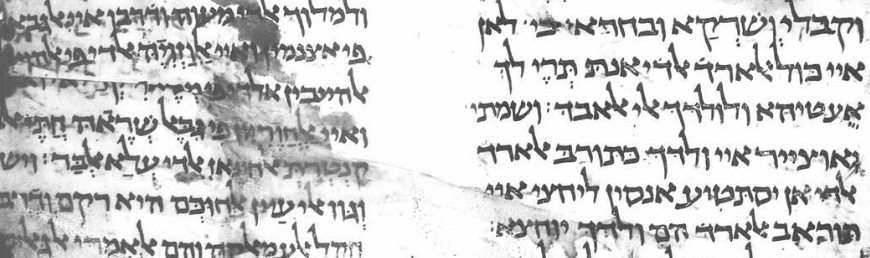
Some Notes on Melody: Saʿadya Gaon and Why ‘Naghma’ Means ‘Vowel’ in Judaeo-Arabic (2025)

The article explores the historical and linguistic contexts behind the use of the term ‘naghma’ in medieval Judaeo-Arabic to signify ‘vowel’, a meaning distinct from its Classical Arabic usage denoting ‘melody’, ‘tone’, or ‘sound’. Focusing on Saʿadya Gaon’s work, particularly his al-Qawl fī al-Nagham (‘Discourse on Melody’), the study highlights how the concept of ‘tone’

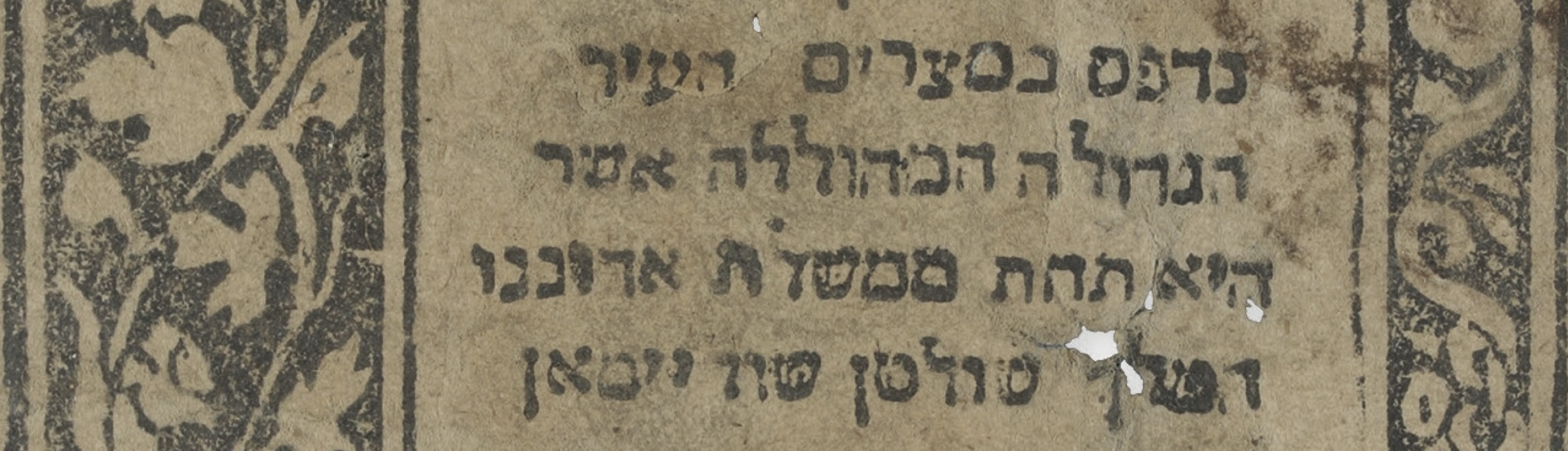
Following the Mediterranean Paper Trail: A Study of European Paper in Late Medieval Cairo (c. 1350–1600) (2024)

This article seeks to cross disciplinary boundaries while examining watermark paper in the ‘Cairo Genizah’ manuscript collections at the Cambridge University Library. Mainly dating between 1100 and 1897, this corpus provides a continuous cross-section of Egyptian-Jewish literary activity during the entire transition to watermark paper, including samples of paper stocks used in Cairo, Alexandria, Rosetta,

The Illustrated Cairo Genizah (2024)

Almost one thousand years ago, the Jews of Old Cairo began to place their worn-out books and scrolls into a hidden storage room – a genizah – of their synagogue. Over the years, they added all sorts of writings to the pile, sacred and secular texts alike. When the chamber was emptied at the end

Illuminating an Illuminated Islamic Document: The Twin Arts of Calligraphy and Embroidery in Fatimid Egypt (T-S K10.12) (2024)

It’s been more than five years since I started working for the Genizah Research Unit here in Cambridge. Since then, I’ve written six Fragment of the Month articles – some of them even good – about Genizah fragments that I’ve found particularly interesting or challenging to interpret. My time in Cambridge ends with this month, and I am

Ernest James Worman and the Victorian Genizah: A Salt-Miner’s Tale of Romance, Tax Evasion, and Sudden Death (2024)

Ernest Worman was the first scholar to experience what many of us have come to recognise as the ‘salt-mine’ of the Genizah. Already seven decades before the founding of the Genizah Research Unit (GRU), he toiled away in the depths of Cambridge University Library (CUL), documenting fragment after fragment that, for the most part, did

From the Battlefield of Books: Essays Celebrating 50 Years of the Taylor-Schechter Genizah Research unit (2024)

This collection of essays celebrates 50 years since the founding of the Taylor-Schechter Genizah Research Unit at Cambridge University Library. Three generations of scholars contributed their research and memories from their time at the GRU, stretching back to 1974. Their work comprises 18 articles on medieval Jewish History, Hebrew and Arabic manuscripts, archival history, and

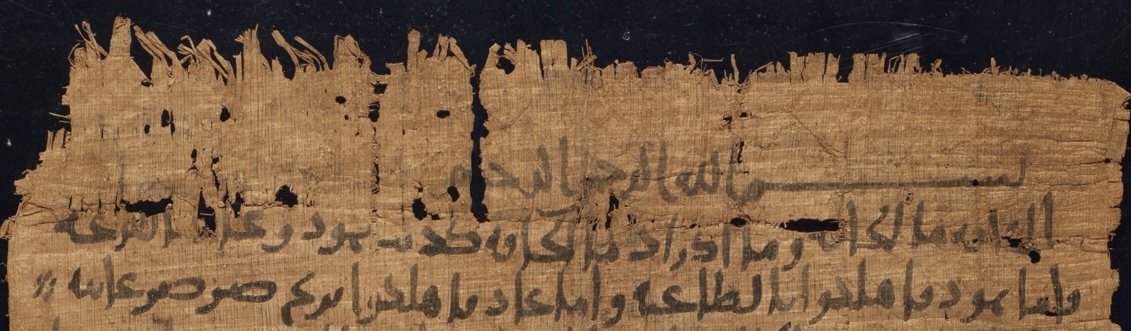
Five Qur’anic Papyri from the Michaelides Collection at the Cambridge University Library (2024)

The Michaelides manuscript collection at the Cambridge University Library contains approximately 700 papyrus fragments collected by George Michaelides in Egypt in the middle of the twentieth century. While a preliminary handlist exists for this collection, most of the papyri have not been fully described. Among them are five Qur’anic papyri that have thus far evaded