A Jewish Translation of Genesis in 10th-Century Egyptian Arabic (2025)
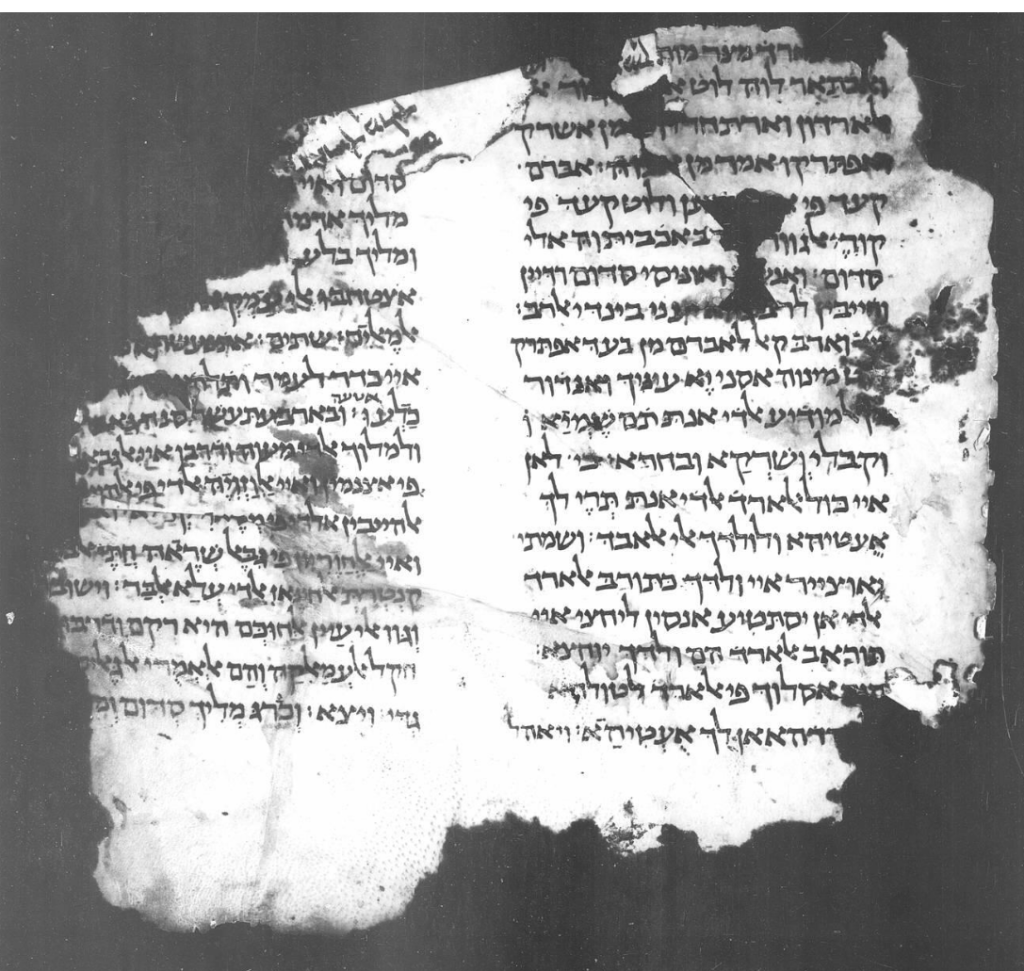
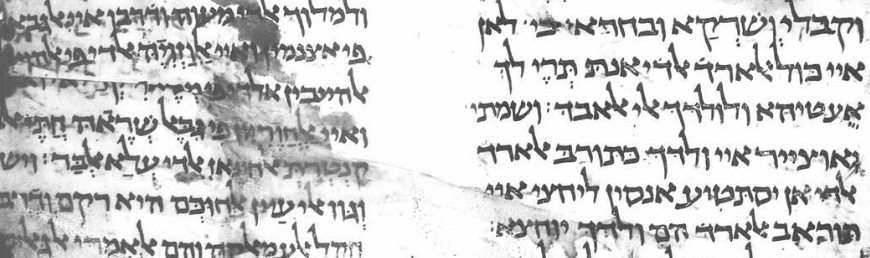
MS Firkovitch Yevr. II B 1526 comes from a Judaeo-Arabic translation of the biblical book of Genesis produced no later than the tenth century. It consists of two parchment folios containing most of Genesis 13.10 through 17.1. In total, 146 lines of text survive at least partially intact. They contain a significant number of Tiberian Hebrew vowel signs–uncommon for a Judaeo-Arabic manuscript this old–which record precise Arabic vocalisation. This article presents an edition of Firkovitch Yevr. II B 1526 and analyses the linguistic features preserved by its non-Classical orthography and vocalisation. It shows that, despite the relative prestige of a biblical manuscript of this scale, the scribe who copied it did not transcribe a linguistic register that matches what might be expected of a ‘Classical Arabic’ reading tradition. Instead, they recorded phonetic variations, apparently from their own Arabic dialect, which can be extracted from the extant text to reconstruct a medieval variety of spoken Arabic.
Read here: https://doi.org/10.17613/8n0v3-p5511
Cite this work: Posegay, Nick. 2025. “A Jewish Translation of Genesis in 10th-Century Egyptian Arabic.” The Intertwined World of the Oral and Written Transmission of Sacred Traditions in the Middle East, eds. Alba Fedeli, Geoffrey Khan, and Johan Lundberg. Cambridge Semitic Languages and Cultures, 40. Cambridge: Open Book Publishers, 275-305, https://doi.org/10.11647/obp.0498.07.