Illuminating an Illuminated Islamic Document: The Twin Arts of Calligraphy and Embroidery in Fatimid Egypt (T-S K10.12) (2024)
It’s been more than five years since I started working for the Genizah Research Unit here in Cambridge. Since then, I’ve written six Fragment of the Month articles – some of them even good – about Genizah fragments that I’ve found particularly interesting or challenging to interpret. My time in Cambridge ends with this month, and I am so grateful for the support of the Genizah Research Unit and University Library since 2019. I am equally grateful for the support of all our Fragment of the Month readers, so here’s one last manuscript mystery for the road.
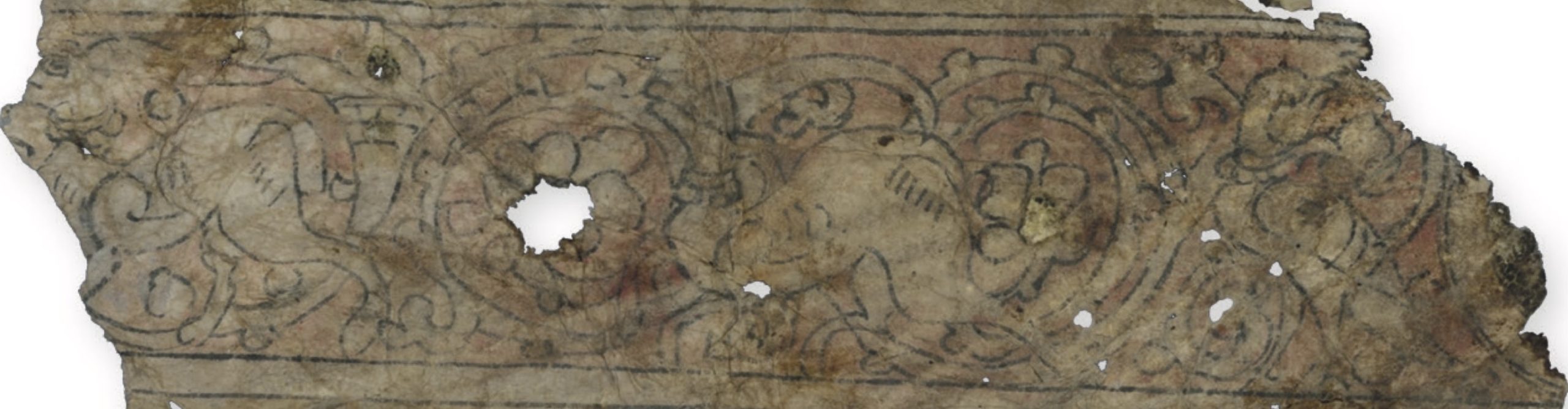
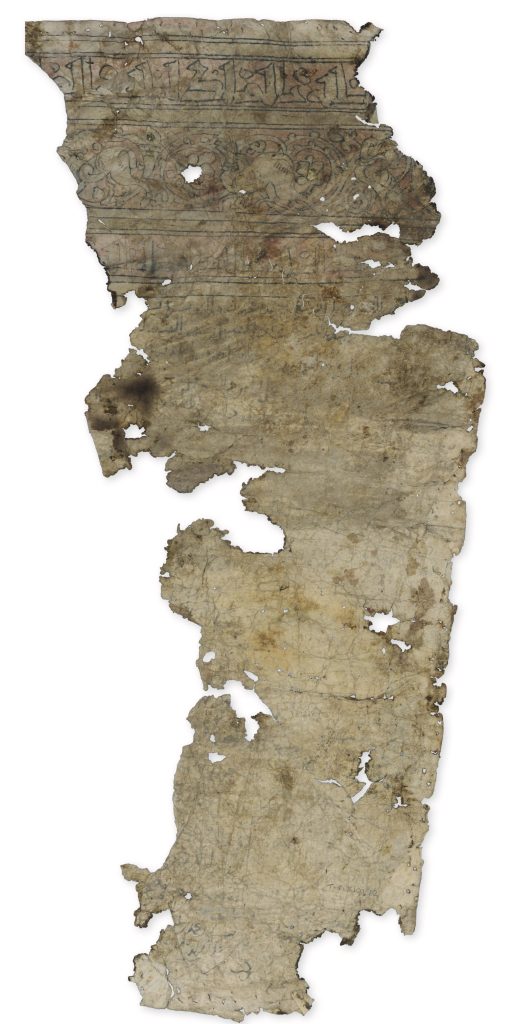
The fragment for this month is T-S K10.12. It is quite large for a Genizah fragment, measuring 53.2 x 25.5 cm. It’s made of parchment and has a vertical ‘rotulus’ format, much taller than it is wide, typical of magical amulets, petitions, and certain other legal documents found in the Genizah. The most striking portion is the top third, which has two illuminated bands of ornamental Arabic calligraphy flanking a series of illustrated animals on a red background. Don’t worry, we will get to them – but first we have to figure out what this manuscript actually is.
Cite this work: Posegay, Nick. 2024. “Illuminating an Illuminated Islamic Document: The Twin Arts of Calligraphy and Embroidery in Fatimid Egypt (T-S K10.12).” Fragment of the Month (August). Cambridge: University Library Genizah Research Unit.