Nick Posegay

Archives • Manuscripts • Interfaith History

About This Site

Thank you to me for making this site. Thank you to academia./edu for forcing my hand by making their own site unsuitable for hosting academic materials. Most of all, thank you to you, dear reader, for finding this weird sidebar.

Illuminating an Illuminated Islamic Document: The Twin Arts of Calligraphy and Embroidery in Fatimid Egypt (T-S K10.12) (2024)

It’s been more than five years since I started working for the Genizah Research Unit here in Cambridge. Since then, I’ve written six Fragment of the Month articles – some of them even good – about Genizah fragments that I’ve found particularly interesting or challenging to interpret. My time in Cambridge ends with this month, and I

From the Battlefield of Books: Essays Celebrating 50 Years of the Taylor-Schechter Genizah Research unit (2024)

This collection of essays celebrates 50 years since the founding of the Taylor-Schechter Genizah Research Unit at Cambridge University Library. Three generations of scholars contributed their research and memories from their time at the GRU, stretching back to 1974. Their work comprises 18 articles on medieval Jewish History, Hebrew and Arabic manuscripts, archival history, and

Five Qur’anic Papyri from the Michaelides Collection at the Cambridge University Library (2024)

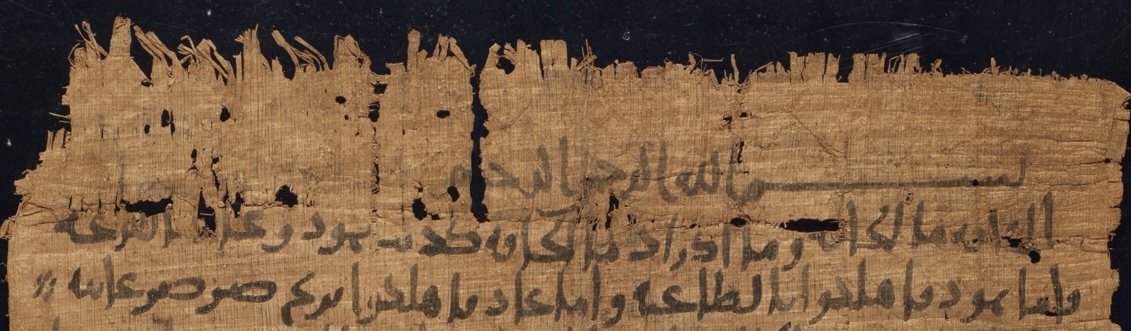
The Michaelides manuscript collection at the Cambridge University Library contains approximately 700 papyrus fragments collected by George Michaelides in Egypt in the middle of the twentieth century. While a preliminary handlist exists for this collection, most of the papyri have not been fully described. Among them are five Qur’anic papyri that have thus far evaded

An Early Arabic Translation of Exodus 15 from a Palestinian Melkite Psalter in the Cairo Genizah (2024)

This article presents an Arabic translation of Exodus 15 from the Cairo Genizah, preserved in two fragments of a Christian psalter (MSS CUL T-S NS 305.198 and T-S NS 305.210). The style of the psalter’s Arabic script suggests that it was copied by a well-trained scribe in the late 9th or early 10th century. Such

The Long Road to Samarqand: Reverse-Engineering the Travels of a 12th-Century Andalusi Muslim (T-S Ar.53.39) (2023)

Over the last 5 years, I have written about several different Cairo Genizah manuscripts for our Fragment of the Month series. Most of the time, I pick a fragment that I’ve spent many days studying to identify what it is and where it came from. These manuscript mysteries often lead to new discoveries that can be fun

A Survey of Personal-Use Qurʾan Manuscripts Based on Fragments from the Cairo Genizah (2021)

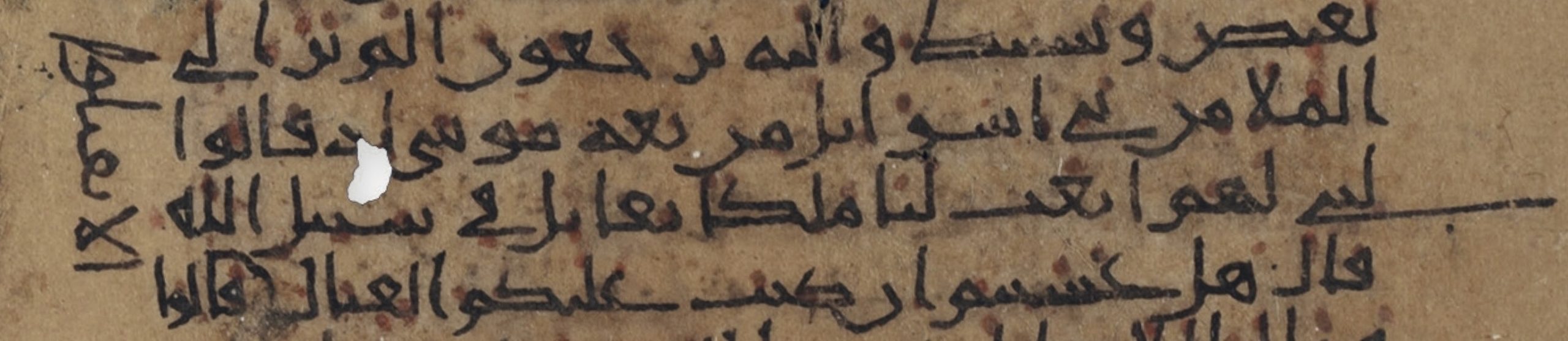
The Cairo Genizah is a repository of texts spanning more than a millennium of Jewish history, including thousands of Hebrew and Judaeo-Arabic manuscripts now held in collections around the world. Among these are fragments from at least 25 separate Qur’an manuscripts in Arabic script, all of which lack any traces of Hebrew writing. Their palaeographic

The Marking of Poetry: A Rare Vocalization System from an Early Qurʾān Manuscript in Chicago, Paris, and Doha (2021)

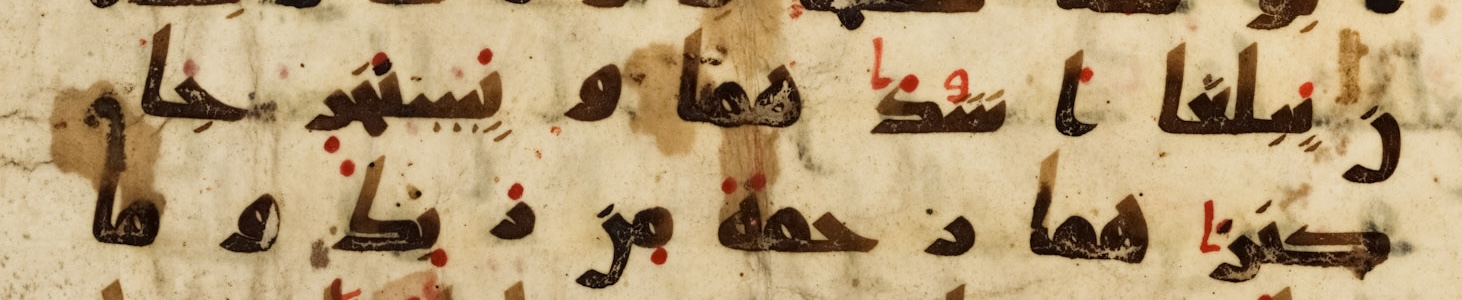
This paper provides updated digital images of four Qurʾān fragments from Chicago’s Oriental Institute Museum (OIM) that appeared in Nabia Abbott’s Rise of the North Arabic Script, and calls attention to features of their paleography and vocalization which are not apparent from her original black-and-white plates. In doing so, it demonstrates that these four fragments

Jewish Parchment, Muslim Prayer – Uncovering an Early Abbasid Palimpsest (2021)

Sometimes it takes a while to identify a Genizah fragment. No one is an expert in all the languages, genres, and scripts that appear in Genizah collections, and even for experts, it is often difficult to decipher severely damaged manuscripts. The Genizah Research Unit has worked for almost five decades to catalogue the Taylor-Schechter Collection,
Three Fragments of a Judaeo-Arabic Translation of Ecclesiastes with Full Tiberian Vocalisation (2021)

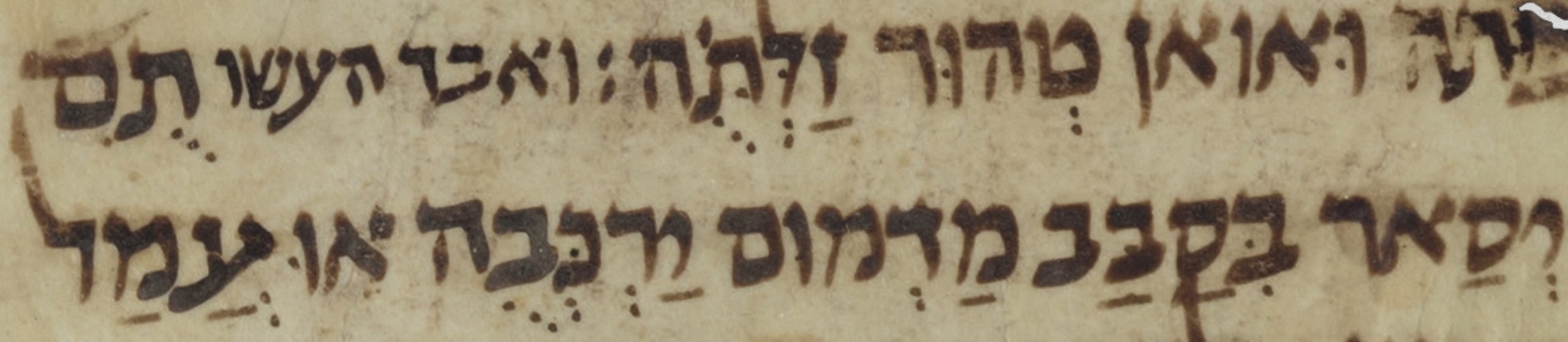
Judaeo-Arabic manuscripts with complete vocalisation are rare, a problem which makes reconstructing the pronunciation of the medieval language challenging. This study presents an edition of a Judaeo-Arabic translation of Ecclesiastes from the Cairo Genizah with full Tiberian vocalisation. This manuscript exhibits noteworthy features of dialectal medieval Arabic and a palaeographic style which places it in

‘An Arabic Qurʾān, That You Might Understand’: Qurʾān Fragments in the T-S Arabic Cairo Genizah Collection (2020)

The Arabic-script Qurʾān fragments of the Cairo Genizah collections have not yet drawn much interest among Arabic and genizah scholars. This paper aims to bring them to the attention of a broader audience by presenting the palaeographic features (§3) and vocalisation systems (§4) of eleven Arabic-script Qurʾān fragments from the Cambridge University Library’s Taylor-Schechter Arabic