About This Site

Thank you to me for making this site. Thank you to academia./edu for forcing my hand by making their own site unsuitable for hosting academic materials. Most of all, thank you to you, dear reader, for finding this weird sidebar.

Contact: nposegay@yahoo.com
Bluesky: @NPosegay

Privacy Policy

Points of Contact: The Shared Intellectual History of Vocalisation in Syriac, Arabic, and Hebrew (2021)

In the first few centuries of Islam, Middle Eastern Christians, Muslims, and Jews alike all faced the challenges of preserving their holy texts in the midst of a changing religious landscape. This situation led Syriac, Arabic, and Hebrew scholars to develop new fields of linguistic science in order to better analyse the languages of the

Hebrew Printing and Printers’ Colophons in the Cairo Genizah: Networking Book Trade in Europe and the Ottoman Empire (2023)

The Cairo Genizah is famous as a source of manuscripts for the study of the medieval Mediterranean world, especially Jewish communities during the High Middle Ages. However, among the hundreds of thousands of Middle Eastern manuscript fragments in Genizah collections are more than 12,000 moveable-type printed items, most of which come from Europe. They are

Solving European Writer’s Block in Jewish Cairo (T-S 20.188) (2023)

One of the duties of the Cambridge Genizah Research Unit (GRU) is to identify and describe the manuscript fragments in the Taylor-Schechter Collection. That Collection contains almost 200,000 fragments, so this job is taking a while. Luckily, the GRU regularly employs experts in medieval Hebrew, Arabic, and Aramaic to catalogue the contents of medieval texts.

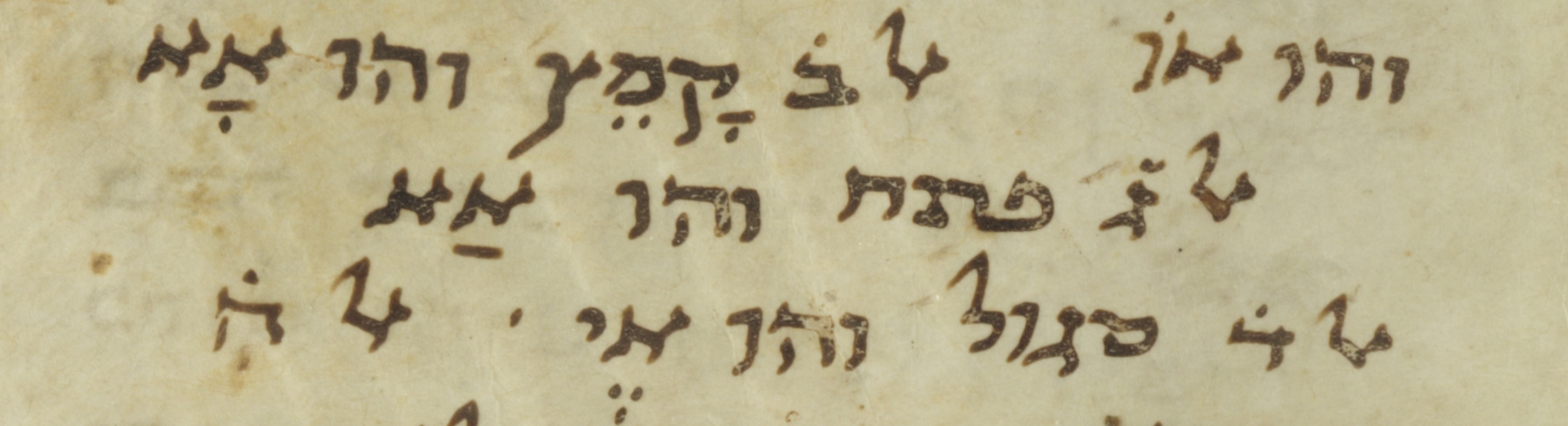
Searching for the Last Genizah Fragment in Late Ottoman Cairo: A Material Survey of Egyptian Jewish Literary Culture (2022)

The Cairo Genizah is well known as a repository for hundreds of thousands of manuscripts that the Jewish residents of Fustat (Old Cairo) produced and consumed in the premodern period. Foreign “collectors” acquired most of these manuscripts for European libraries in the second half of the nineteenth century, with the majority arriving at the Cambridge

A Survey of Personal-Use Qurʾan Manuscripts Based on Fragments from the Cairo Genizah (2021)

The Cairo Genizah is a repository of texts spanning more than a millennium of Jewish history, including thousands of Hebrew and Judaeo-Arabic manuscripts now held in collections around the world. Among these are fragments from at least 25 separate Qur’an manuscripts in Arabic script, all of which lack any traces of Hebrew writing. Their palaeographic

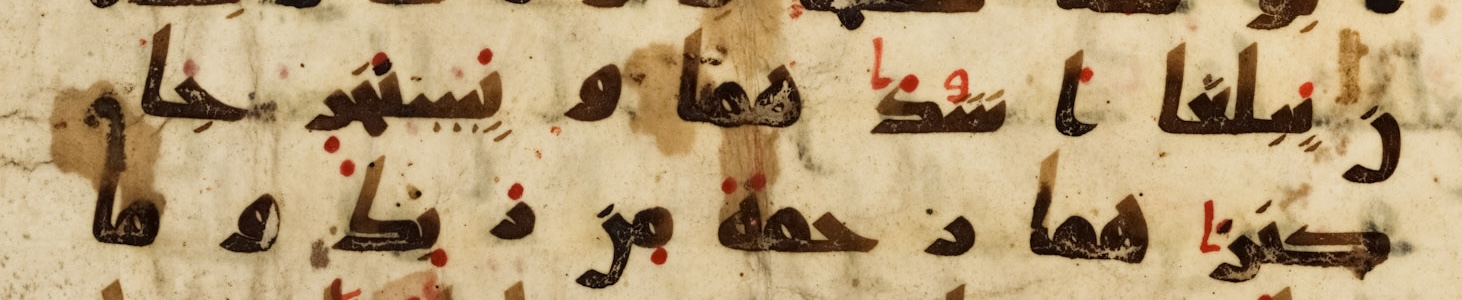
The Marking of Poetry: A Rare Vocalization System from an Early Qurʾān Manuscript in Chicago, Paris, and Doha (2021)

This paper provides updated digital images of four Qurʾān fragments from Chicago’s Oriental Institute Museum (OIM) that appeared in Nabia Abbott’s Rise of the North Arabic Script, and calls attention to features of their paleography and vocalization which are not apparent from her original black-and-white plates. In doing so, it demonstrates that these four fragments

To Belabour the Points: Encoding Vowel Phonology in Syriac and Hebrew Vocalization (2021)

Medieval Hebrew and Syriac scribes both indicated vowels by placing dots above or below their consonantal writing. These vowel points were created in the Late Antique and early Islamic periods to disambiguate the vocalization of important texts, especially the Bible. The earliest step in this process was the implementation of the Syriac ‘diacritic dot’ system,

Men of Letters in the Syriac Scribal Tradition: Dawid bar Pawlos, Rabban Rāmišoʿ, and the Family of Beṯ Rabban (2021)

Dawid bar Pawlos’ Letter on Dots is an eighth-century text that purportedly describes the introduction of some of the dots used in Syriac writing. It also sheds light on the life of a certain Rāmišoʿ of Beṯ Rabban, apparently the same man as the master of pointing named in MS BL Add. 12138. However, most