Nick Posegay

Archives • Manuscripts • Interfaith History

About This Site

Thank you to me for making this site. Thank you to academia./edu for forcing my hand by making their own site unsuitable for hosting academic materials. Most of all, thank you to you, dear reader, for finding this weird sidebar.

Hebrew Printing and Printers’ Colophons in the Cairo Genizah: Networking Book Trade in Europe and the Ottoman Empire (2023)

The Cairo Genizah is famous as a source of manuscripts for the study of the medieval Mediterranean world, especially Jewish communities during the High Middle Ages. However, among the hundreds of thousands of Middle Eastern manuscript fragments in Genizah collections are more than 12,000 moveable-type printed items, most of which come from Europe. They are

The Long Road to Samarqand: Reverse-Engineering the Travels of a 12th-Century Andalusi Muslim (T-S Ar.53.39) (2023)

Over the last 5 years, I have written about several different Cairo Genizah manuscripts for our Fragment of the Month series. Most of the time, I pick a fragment that I’ve spent many days studying to identify what it is and where it came from. These manuscript mysteries often lead to new discoveries that can be fun

Solving European Writer’s Block in Jewish Cairo (T-S 20.188) (2023)

One of the duties of the Cambridge Genizah Research Unit (GRU) is to identify and describe the manuscript fragments in the Taylor-Schechter Collection. That Collection contains almost 200,000 fragments, so this job is taking a while. Luckily, the GRU regularly employs experts in medieval Hebrew, Arabic, and Aramaic to catalogue the contents of medieval texts.

Searching for the Last Genizah Fragment in Late Ottoman Cairo: A Material Survey of Egyptian Jewish Literary Culture (2022)

The Cairo Genizah is well known as a repository for hundreds of thousands of manuscripts that the Jewish residents of Fustat (Old Cairo) produced and consumed in the premodern period. Foreign “collectors” acquired most of these manuscripts for European libraries in the second half of the nineteenth century, with the majority arriving at the Cambridge

A Survey of Personal-Use Qurʾan Manuscripts Based on Fragments from the Cairo Genizah (2021)

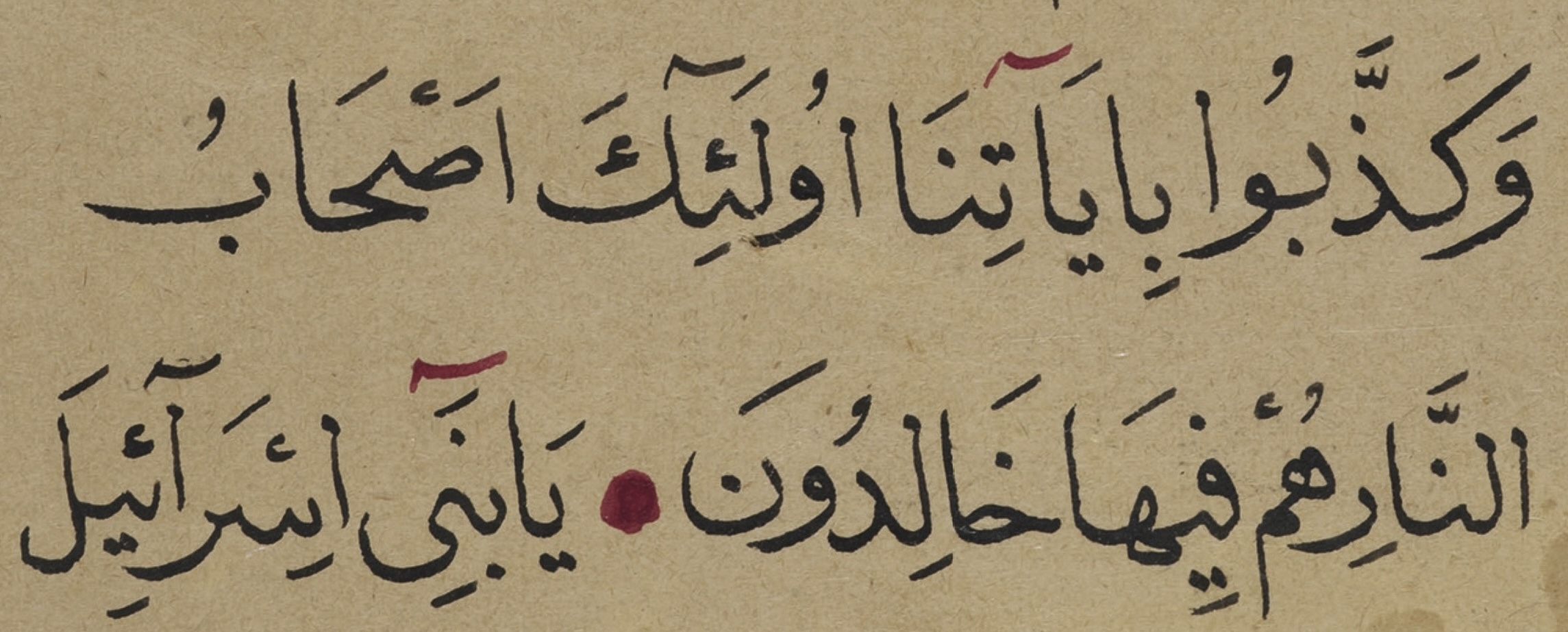
The Cairo Genizah is a repository of texts spanning more than a millennium of Jewish history, including thousands of Hebrew and Judaeo-Arabic manuscripts now held in collections around the world. Among these are fragments from at least 25 separate Qur’an manuscripts in Arabic script, all of which lack any traces of Hebrew writing. Their palaeographic

Jewish Parchment, Muslim Prayer – Uncovering an Early Abbasid Palimpsest (2021)

Sometimes it takes a while to identify a Genizah fragment. No one is an expert in all the languages, genres, and scripts that appear in Genizah collections, and even for experts, it is often difficult to decipher severely damaged manuscripts. The Genizah Research Unit has worked for almost five decades to catalogue the Taylor-Schechter Collection,

Three Fragments of a Judaeo-Arabic Translation of Ecclesiastes with Full Tiberian Vocalisation (2021)

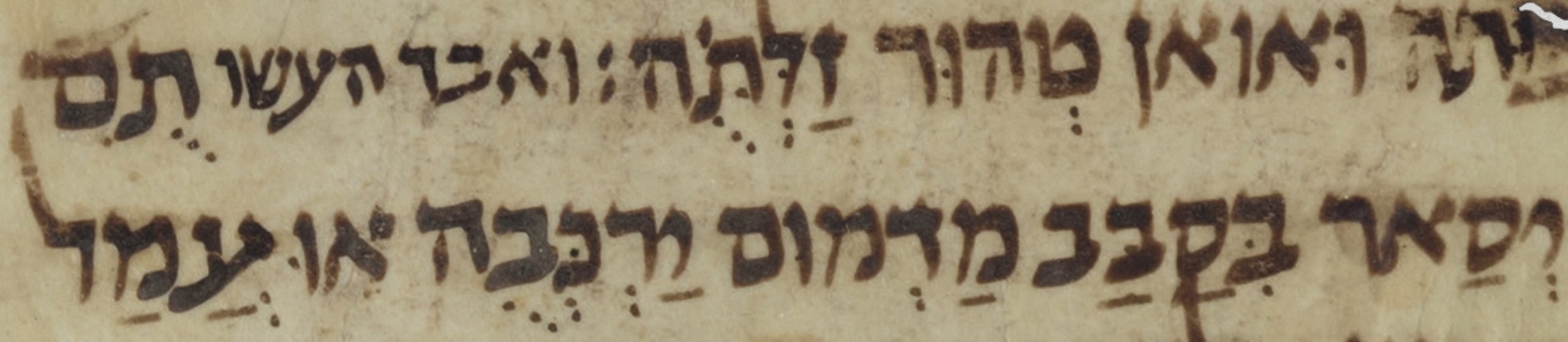
Judaeo-Arabic manuscripts with complete vocalisation are rare, a problem which makes reconstructing the pronunciation of the medieval language challenging. This study presents an edition of a Judaeo-Arabic translation of Ecclesiastes from the Cairo Genizah with full Tiberian vocalisation. This manuscript exhibits noteworthy features of dialectal medieval Arabic and a palaeographic style which places it in

Following the Links in T-S NS 192.11: A Qurʾanic Exercise from a Cairene Public School (2020)

No individual possesses the expertise required to understand every manuscript in the Genizah collections, so as researchers we must utilise all available resources to interpret what we find. Sometimes that means consulting long-forgotten tomes in the deepest vaults of the University Library, or squinting at microfilms that were surely cutting-edge at some point in the

‘An Arabic Qurʾān, That You Might Understand’: Qurʾān Fragments in the T-S Arabic Cairo Genizah Collection (2020)

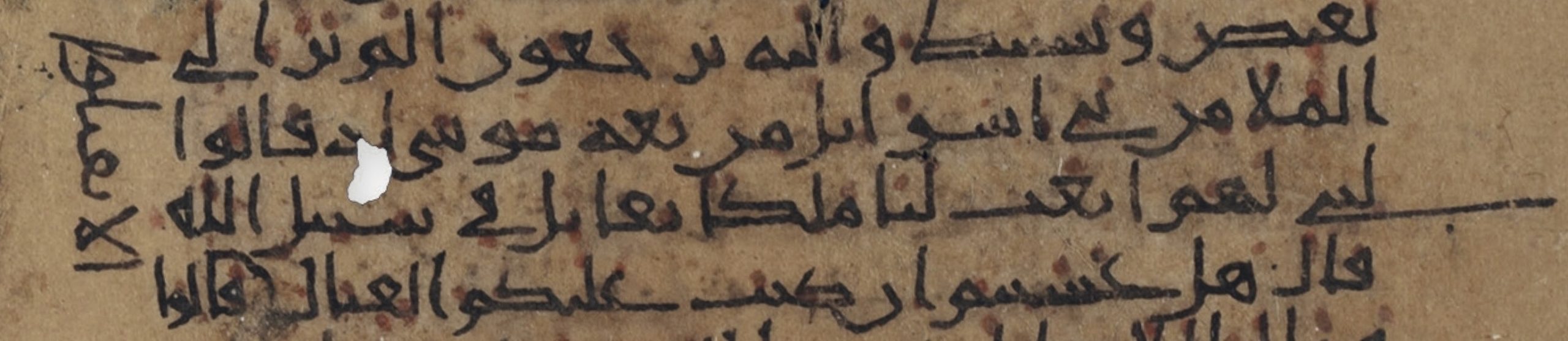
The Arabic-script Qurʾān fragments of the Cairo Genizah collections have not yet drawn much interest among Arabic and genizah scholars. This paper aims to bring them to the attention of a broader audience by presenting the palaeographic features (§3) and vocalisation systems (§4) of eleven Arabic-script Qurʾān fragments from the Cambridge University Library’s Taylor-Schechter Arabic

A Judaeo-Arabic Biblical Glossary as a Source for Arabic Historical Dialectology (2020)

MS T-S Ar.5.58 is a translation glossary from the Cairo Geniza that contains a list of Judaeo-Arabic glosses for Hebrew words from the biblical book of Samuel. These Arabic words are fully vocalised with the Tiberian Hebrew pointing system, providing more precise phonetic information about the scribe’s native Arabic dialect than could be expressed with