Current Projects
Constantinople 1546: A Crossroads of Hebrew and Arabic Culture
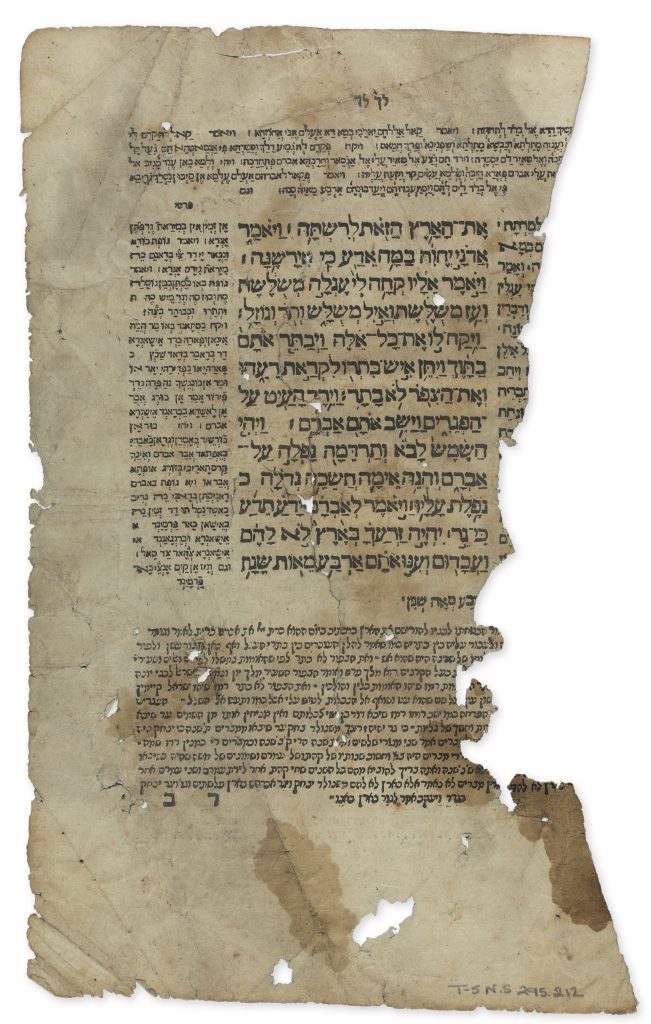
In 1546, in the heart of the Ottoman Empire, the Jewish Soncino family printed what is now known as the Constantinople Polyglot, a landmark edition of the Hebrew Bible containing 4 different translations of the Pentateuch. It was the first book ever printed with Judaeo-Arabic (‘Arabic in Hebrew characters’) text, marking a pivotal moment in the history of Hebrew-script printing. This Bible became widely popular among Jews both in both Europe and the Ottoman Empire.
Unexpectedly, the Judaeo-Arabic column of the Constantinople Polyglot contains full Hebrew vocalisation signs. These signs preserve more precise information about the historic pronunciation of this Arabic translation than would be possible if it were recorded in Arabic characters. The Constantinople Polyglot is thus a major untapped source of data for scholars of Arabic historical dialectology.
This project takes a cross-disciplinary approach to the Constantinople Polyglot, aiming to transcribe and edit its Judaeo-Arabic portion to produce a scholarly edition suitable for close analysis by Arabic linguists. The final product will be a monograph that combines this edition with a linguistic study of the Polyglot’s vocalisation, revealing new information about the Arabic dialect and formal reading traditions of the early modern Jews who printed it.
Location: Ruhr University Bochum, Institute for Arabic and Islamic Studies
Funding: Alexander von Humboldt Postdoctoral Fellowship
Role: Primary Investigator (2025-2027)
Past Projects
Interfaith Exchange in the Intellectual History of Middle Eastern Languages
By comparing primary sources in Hebrew, Syriac, Arabic, and Judaeo-Arabic, including unpublished manuscripts from the Cairo Genizah and Syriac Christian libraries, this project investigated the shared intellectual history of Middle Eastern Jews, Christians, and Muslims in their study of the languages of the Bible and the Qur’an. This work enhanced the understanding of the ways different religious communities exchanged ideas in the pre-modern Middle East, promoting a unified conception of regional history and making new data available to scholars of multiple historic languages. This in turn connected varied religious and linguistic specialties to encourage cooperation in Middle Eastern Studies as a field of interdisciplinary academic inquiry.
Location: University of Cambridge, Faculty of Asian & Middle Eastern Studies
Funding: Leverhulme Trust Early Career Postdoctoral Fellowship
Role: Primary Investigator (2021-2024)

The Transformation of Jewish Literature in Arabic in the Islamicate World
“What do we know about Judaeo-Arabic literature? What is behind the adoption of the Arabic language as the predominant language of literary production amongst the Jewish population in the 9th to 11th centuries? How did it change Jewish literature? The EU-funded MAJLIS project will answer these questions. Specifically, it will study the Arabic literature of the Qaraites, a Jewish intellectual movement whose religious and scholarly centre, the Academy of Jerusalem, played a catalytic role in these transformation processes. To analyse texts produced there, the project will use novel digital tools to trace changes in Jewish literature and contrast them to previous literary models. It will also identify the dominant scholars and analyse their geographical origins.” [quotation from the ERC grant record: https://doi.org/10.3030/101002243]
Website: https://www.jewisharabiccultures.fak12.uni-muenchen.de/majlis/
Location: Ludwig Maximilians University Munich, Research Centre for Jewish-Arabic Cultures
Funding: European Research Council Consolidator Grant
Role: Postdoctoral Research Associate (2021-2022)


Thinking Paper
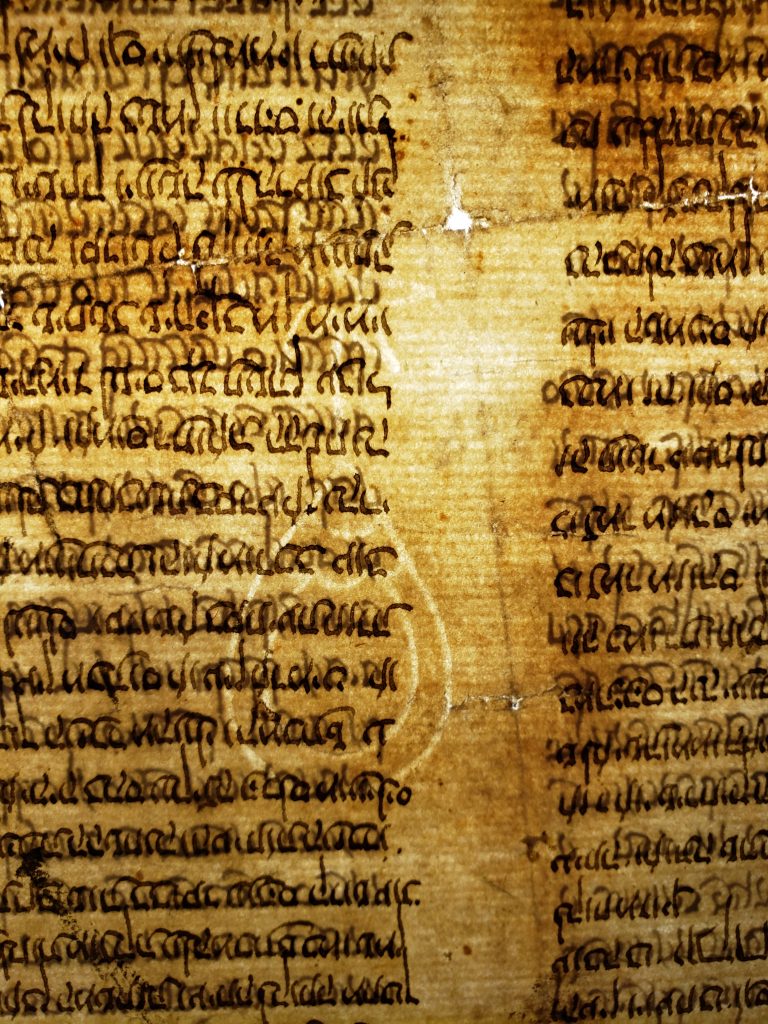
“Paper has now become invisible, and yet it is everywhere. It is so common in our everyday life that we sometimes fail to notice it. Paper is available in all sort of shapes, quality and colour. We rely on paper for the quotidian and the extraordinary. We think with paper, we write with paper, we create with paper, we imagine with paper and we feel through paper. The digital revolution, heralding the demise of paper, turned out to be a technological evolution, and we have discovered, or perhaps are still discovering, that these two technologies can accommodate one another, rather than competing against each other. Paper is a success story, ubiquitously present in post-modern times.
In the premodern period, paper was equally hailed as the medium which saw off parchment. Recent work has, however, demonstrated, that the acceptance and adoption of media require further analysis, and the mechanisms surrounding the reception, understanding and, more importantly, its signification requires a broader approach across disciplines and approaches. ‘Thinking Paper’ aims to bring together colleagues working on paper in multiple disciplines (Arts, Humanities, Social Sciences and Technology) and across different settings, including the GLAM and heritage sectors. If we were to ask literary scholars, historians of the book, economists, archivists, conservators, curators, artists, material scientists, surface chemists, bioarchaeologists, machine learning experts what ‘thinking paper’ means to them, what productive discussions would ensue? What research themes and questions about paper might emerge and what means of engaging the public with this fascinating multivalent material?” [quotation from Research & Collections Programme site: https://collectionsresearch.lib.cam.ac.uk/research-growth-networks/materiality/thinking-paper]
Location: University of Cambridge, University Library/Faculty of English
Funding: Cambridge University Library Research & Collections Programme Grant
Role: Postdoctoral Research Assistant (2021)
Documents and Poetry in the Cairo Genizah
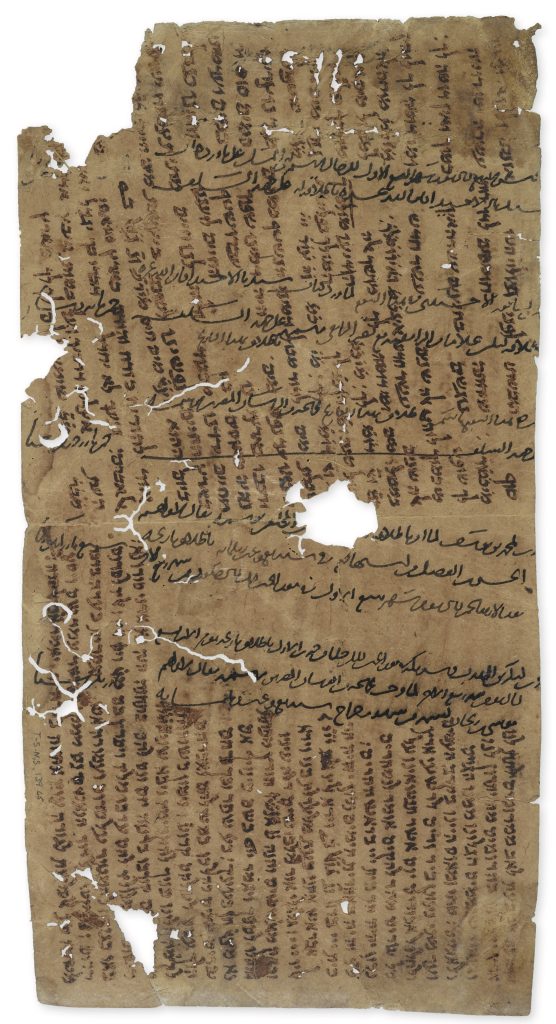
We catalogued several thousand Cairo Genizah manuscript fragments and prepared them for TEI markup. A lot of them were documents or poetry. Others weren’t. It was cool.
Location: Cambridge University Library, Taylor-Schechter Genizah Research Unit
Funding: Rothschild Foundation Hanadiv Europe Grant
Role: Student Research Assistant (2019-2020); Postdoctoral Research Associate (2021-2022)
Powered by WordPress
Pages
Social